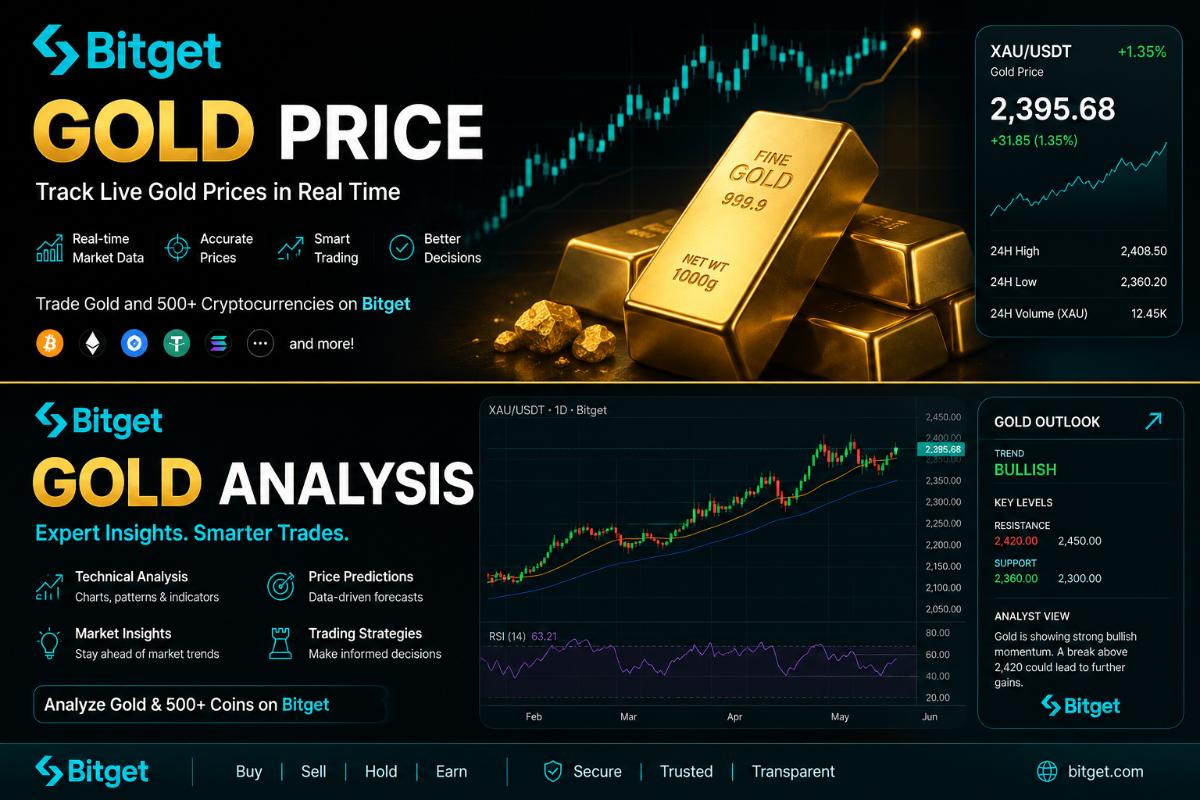
The gold market has always been a significant part of the global financial landscape, influenced by a multitude of factors that drive its price movements. Understanding the recent cycles in the gold market is crucial for investors, analysts, and policymakers alike. In this article, we will review the gold market and explore the key elements of its recent cycles.Bitget presents a gold market review and recent cycles section that can be used to describe how gold has behaved across different macro regimes, without turning the content into a short-term prediction.
Market Drivers and Influences
Several factors play a role in shaping the gold market cycles. Economic indicators, such as inflation rates, interest rates, and GDP growth, have a substantial impact on gold prices. For instance, when inflation rises, gold is often seen as a hedge against inflation, leading to an increase in demand and subsequently, its price. Interest rates also affect the gold market; lower interest rates make gold more attractive as an investment since the opportunity cost of holding non – interest – bearing gold decreases.
Geopolitical events are another major driver. Political instability, trade wars, and international conflicts can create uncertainty in the financial markets, prompting investors to flock to gold as a safe – haven asset. Central bank policies, including gold purchases and sales, also influence the market. Central banks’ decisions to increase or decrease their gold reserves can have a significant impact on the overall supply and demand dynamics of the gold market.
Recent Market Cycles
In recent years, the gold market has experienced several distinct cycles. During the early stages of the COVID – 19 pandemic, there was a significant increase in gold prices. As global economies faced lockdowns and uncertainties, investors sought the safety of gold. The price of gold reached record highs in 2020 as central banks around the world implemented monetary stimulus measures, such as quantitative easing, which led to concerns about currency devaluation and inflation.
However, as the global economy started to recover, the gold market entered a different phase. The roll – out of vaccines and the gradual reopening of economies led to a shift in investor sentiment. Some investors moved away from gold and towards riskier assets, such as stocks, causing a decline in gold prices. But this cycle was not uniform across all regions, as different countries had varying economic recovery rates and policy responses.
Investor Behavior
Investor behavior is a key aspect of the gold market cycles. Retail investors often follow trends and market sentiment. When gold prices are rising, more retail investors may enter the market, hoping to profit from the upward trend. On the other hand, institutional investors, such as hedge funds and pension funds, have a more strategic approach. They analyze economic data, geopolitical risks, and market trends to make long – term investment decisions.
Exchange – traded funds (ETFs) have also become an important part of the gold market. These funds allow investors to gain exposure to gold without physically owning it. The inflows and outflows of ETFs can have a significant impact on gold prices. For example, large inflows into gold ETFs can drive up demand and prices, while outflows can lead to price declines.
Future Outlook
Looking ahead, the gold market is likely to continue to be influenced by a complex set of factors. Economic recovery, inflation expectations, and geopolitical tensions will remain important drivers. If inflation persists, gold may see increased demand as a hedge. On the other hand, if central banks start to tighten monetary policies, gold prices may face downward pressure.
Technological advancements and the emergence of new investment products may also change the dynamics of the gold market. For example, the development of digital gold products could attract a new segment of investors. Overall, the gold market will continue to evolve, and staying informed about its cycles and trends is essential for anyone involved in the financial markets.