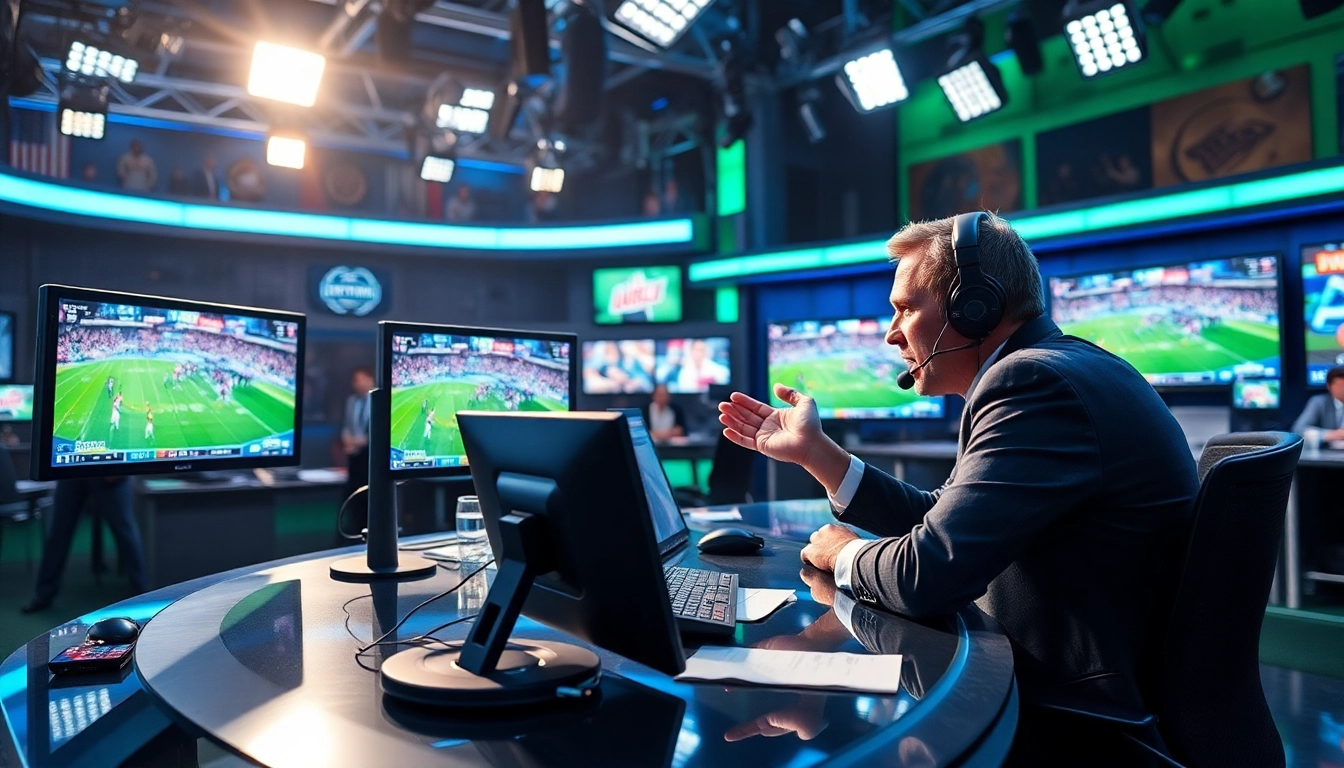
Understanding Sports Broadcasting Fundamentals
Sports broadcasting is an intricate field that merges entertainment, technology, and sports. It encompasses the production, transmission, and presentation of sports content to audiences via various channels. From live telecasts to online streaming, the dynamics of Sports Broadcasting have evolved significantly over the years. To grasp its multifaceted nature, we first need to break down what sports broadcasting entails, the roles involved, and its importance to fans.
Definition of Sports Broadcasting
Sports broadcasting refers to the dissemination of sports-related content through television, radio, or online platforms. It includes live game coverage, analysis programs, sports news, and commentary. It aims to engage audiences by providing them with real-time updates, in-depth analyses, and entertainment through various formats, such as pre-game shows, post-game analyses, and sports documentaries.
Key Roles in Sports Broadcasting
Sports broadcasting involves various professionals, each playing a crucial role in delivering quality content:
- Announcers/Commentators: Provide live commentary during games, helping viewers understand the action as it unfolds.
- Producers: Oversee the entire production process, ensuring a seamless broadcast.
- Camera Operators: Capture the visual elements of the broadcast, focusing on key moments of the game.
- Technical Staff: Manage the broadcasting equipment, including audio and visual systems, ensuring everything runs smoothly.
- Analysts: Offer insights and expert opinions to enhance the audience’s understanding of the game and strategies involved.
Importance of Sports Broadcasting to Fans
For fans, sports broadcasting is a vital link to their favorite sports and teams. It provides convenience, enabling them to watch games live or through recorded broadcasts. Moreover, it creates a communal experience where fans can engage with other viewers, discuss games, and share insights. This connection is critical for maintaining interest and loyalty among fan bases across different sports.
The Evolution of Sports Broadcasting Techniques
Historical Changes in Sports Broadcasting
The history of sports broadcasting dates back to the early 20th century, with the first radio broadcasts of sports events. As technology evolved, so too did broadcasting methods. Television broadcasts began in the 1940s, revolutionizing how fans consumed sports content. Over the years, advancements such as color broadcasting, satellite transmission, and high-definition (HD) technology have enhanced the viewer experience, making games more accessible and enjoyable.
Technological Innovations Shaping Sports Broadcasting
Advancements in technology continue to shape the sports broadcasting landscape:
- HD and 4K Broadcasting: Enhanced clarity and detail, allowing fans to experience games as if they were on-site.
- Mobile Streaming: Enables fans to watch games on the go, making sports more accessible than ever.
- Virtual Reality (VR): Offers immersive viewing experiences, simulating the feel of being in the stadium.
- Data Analytics: Analyzes viewer preferences and behaviors to tailor content accordingly, enhancing engagement.
Impact of Social Media on Sports Broadcasting
Social media platforms have become integral to sports broadcasting, serving as additional channels for content dissemination. They allow broadcasters to engage with audiences in real-time, promote upcoming events, and build fan communities. Highlights, interviews, and behind-the-scenes content shared on platforms like Twitter, Instagram, and TikTok improve viewer interaction and loyalty while reaching wider audiences.
Best Practices for Effective Sports Broadcasting
Preparing for Sports Broadcasting Events
A successful sports broadcast starts long before the event itself. Preparation involves extensive research, ensuring that announcers and commentators are well-versed in the teams, players, and strategies involved. Pre-game meetings among the production team can streamline workflows and enhance the overall quality of the broadcast. Preparation ensures that any unexpected events during the live show can be managed efficiently.
Engagement Strategies for Viewers
To connect with viewers, broadcasters must employ various engagement strategies:
- Interactive Segments: Implement polls, quizzes, and Q&A sessions to encourage viewer participation.
- Social Media Integration: Encourage fans to share their opinions and experiences on social media during broadcasts.
- Fan-Centric Content: Include segments focused on fan stories, enhancing community feelings and loyalty.
Maintaining Professional Standards in Sports Broadcasting
Professionalism in sports broadcasting is crucial. Broadcasters must maintain objectivity and fairness while presenting content. Ethical reporting practices help build trust with audiences, while continuous training and adherence to industry standards ensure that all broadcast materials meet high-quality expectations.
Challenges in the Sports Broadcasting Industry
Dealing with Real-Time Issues During Live Telecasts
Live broadcasts are prone to numerous unforeseen challenges, from technical glitches to unexpected events during the game. Broadcasters must train teams to handle such situations swiftly and professionally, ensuring viewers remain engaged and informed. Backup systems, such as redundant feeds, can be invaluable in managing such challenges.
Maintaining Objectivity in Sports Broadcasting
Objectivity is a cornerstone of sports broadcasting, yet it can be difficult to maintain, particularly when covering local teams. Broadcasters need to ensure their commentary does not skew positively or negatively towards any team, thus preserving the integrity of their reporting. Striking a balance requires an understanding of both the emotional and analytical aspects of sports.
Adapting to New Audience Preferences
As audience preferences evolve, so must sports broadcasting. This includes adapting to changes in how viewers consume sports content, such as the shift towards on-demand services and personalized viewing experiences. Broadcasters must analyze viewer data effectively to understand and cater to evolving preferences, ensuring their content remains relevant and appealing.
The Future of Sports Broadcasting
Emerging Trends in Sports Broadcasting
The landscape of sports broadcasting is undergoing continuous transformation, with several emerging trends likely to shape its future:
- Personalization: Leveraging data analytics to provide tailored content to individual viewer preferences.
- Augmented Reality (AR): Integrating AR elements into broadcasts to enrich viewer experience with additional insights and fun visuals.
- Increased Interaction: Advanced technologies making live interactions between fans and broadcasters more seamless.
The Role of AI in Sports Broadcasting
Artificial intelligence (AI) is set to play a pivotal role in shaping sports broadcasting. AI can assist in automating certain production processes, data analysis, and even providing real-time statistics to enhance commentary. Furthermore, AI-driven tools can create personalized highlights for users, enhancing engagement.
Predictions for Sports Broadcasting Growth
The future of sports broadcasting looks optimistic. As technology advances, the demand for innovative and engaging content will increase. With new platforms emerging, broadcasters will find diverse avenues to reach audiences, resulting in broader engagement and potential revenue growth.
FAQs About Sports Broadcasting
What is sports broadcasting?
Sports broadcasting involves the distribution of sports content through platforms like TV, radio, and online, including live games and analysis.
How has technology changed sports broadcasting?
Technology has introduced HD broadcasts, mobile streaming, and interactivity, significantly enhancing viewer experiences.
What roles are essential in sports broadcasting?
Key roles include announcers, producers, camera operators, technical staff, and analysts, each vital for a quality broadcast.
What challenges does sports broadcasting face today?
Challenges include managing real-time issues, maintaining objectivity, and adapting to changing audience preferences.
What trends are emerging in sports broadcasting?
Emerging trends include personalization, AR integration, and increased viewer interaction through advanced technologies.